

Spain national football team vs Argentina national football team stats reveal a remarkably balanced international rivalry, but the latest meeting has shifted the recent narrative. Across 15 recorded senior internationals, Spain lead the overall series with seven wins, Argentina have six, and two matches have ended level. The combined score is also close, with Spain holding a 20–18 edge. The most recent encounter came in the 2026 FIFA World Cup final, where Spain defeated Argentina 1–0 after extra time.
Historical Balance and What the Numbers Show
The historical numbers become more interesting when the full timeline is considered. The teams first met in 1952, and their rivalry has included World Cup football as well as numerous international friendlies. Unlike some famous international matchups dominated by one side for decades, this fixture has repeatedly changed direction.
Argentina won several of the earliest meetings, including the first two encounters in 1952 and 1953. Spain then recorded victories in the 1960s and 1970s, while the 1974 and 1988 meetings ended in draws. The 1990s and 2000s brought another swing, with both nations collecting important wins.
Spain National Football Team vs Argentina National Football Team Stats at a Glance
| Category | Spain | Argentina |
|---|---|---|
| Total meetings | 15 | 15 |
| Wins | 7 | 6 |
| Draws | 2 | 2 |
| Goals scored | 20 | 18 |
| Biggest win | 6–1 | 4–1 |
| Most recent meeting | 1–0 win | 1–0 loss |
These figures cover the senior international meetings listed in historical head-to-head records and include the 2026 World Cup final.
The Importance of the 2026 World Cup Final
The latest chapter in the spain national football team vs argentina national football team stats came on the biggest possible stage. Spain beat Argentina 1–0 after extra time in the 2026 World Cup final, giving La Roja a major competitive victory over a team that had recently established itself as one of international football’s strongest sides.
The final was significant because earlier meetings between these countries were overwhelmingly friendlies. The 1966 World Cup had previously been the only World Cup encounter in the senior head-to-head list. Argentina won that match 2–1. More than half a century later, Spain gained a measure of tournament revenge by winning the 2026 final.
A World Cup final carries a different statistical weight from a friendly. It affects tournament history, legacy, player reputations and national football narratives.
The 2018 Meeting Remains One of the Biggest Scorelines
One of the most memorable entries is Spain’s 6–1 victory over Argentina in Madrid on March 27, 2018. It remains Spain’s biggest win against Argentina and one of the highest-scoring matches in the fixture.
Spain controlled the game with aggressive possession, quick passing and efficient finishing. Argentina, despite creating moments, struggled to contain Spain’s movement between midfield and defense. The six-goal margin made the result unusually emphatic for a matchup between two elite national teams.
That result should also be placed in context. It was a friendly rather than a World Cup or continental tournament fixture. Therefore, the scoreline is historically important, but it does not carry the same competitive significance as the 2026 final.
Argentina’s Response in 2010
Argentina produced the opposite kind of statistical statement in September 2010, defeating Spain 4–1 in Buenos Aires. That result remains Argentina’s biggest victory over Spain in the recorded senior series.
The match demonstrated how quickly the balance between these teams can change. Spain entered the contest as the reigning world champions after winning the 2010 World Cup, yet Argentina produced a decisive home performance.
The 4–1 scoreline also prevents a simplistic interpretation of the rivalry. Spain’s 6–1 win in 2018 and Argentina’s 4–1 win in 2010 show that either side can dominate when its tactical approach, finishing and game management come together.
A Closer Look at Recent Meetings
The modern era has produced several closely contested matches. Spain defeated Argentina 2–1 in 2006 and repeated the scoreline in 2009. Argentina then answered with a 4–1 victory in 2010. Spain’s 6–1 win followed in 2018, before the 2026 World Cup final ended 1–0 in Spain’s favor.
This sequence highlights two important patterns. First, recent meetings have often produced decisive results rather than long stretches of goalless football. Second, the winner has changed from match to match, showing that historical reputation alone does not determine the outcome.
For readers studying international football statistics, the fixture is a good example of why head-to-head numbers should be separated into overall records, competitive matches and recent form.
World Cup History Between the Two Nations
World Cup meetings are rare in this rivalry. Before the 2026 final, Argentina and Spain had met only once at the senior World Cup: in 1966. Argentina won 2–1 in that encounter.
The 2026 final therefore created only the second World Cup meeting between the nations. Spain’s 1–0 victory changed the competitive record between them at the tournament level to one win apiece.
This is an important distinction when analyzing the spain national football team vs argentina national football team stats. A team can lead the overall head-to-head record while having a different record in major competitions. In this case, Spain and Argentina now have a perfectly balanced World Cup meeting record.
Why the Goal Totals Are So Close
The combined head-to-head goal count stands at 20 for Spain and 18 for Argentina. A two-goal difference across 15 matches is small, particularly given that both teams have recorded large victories.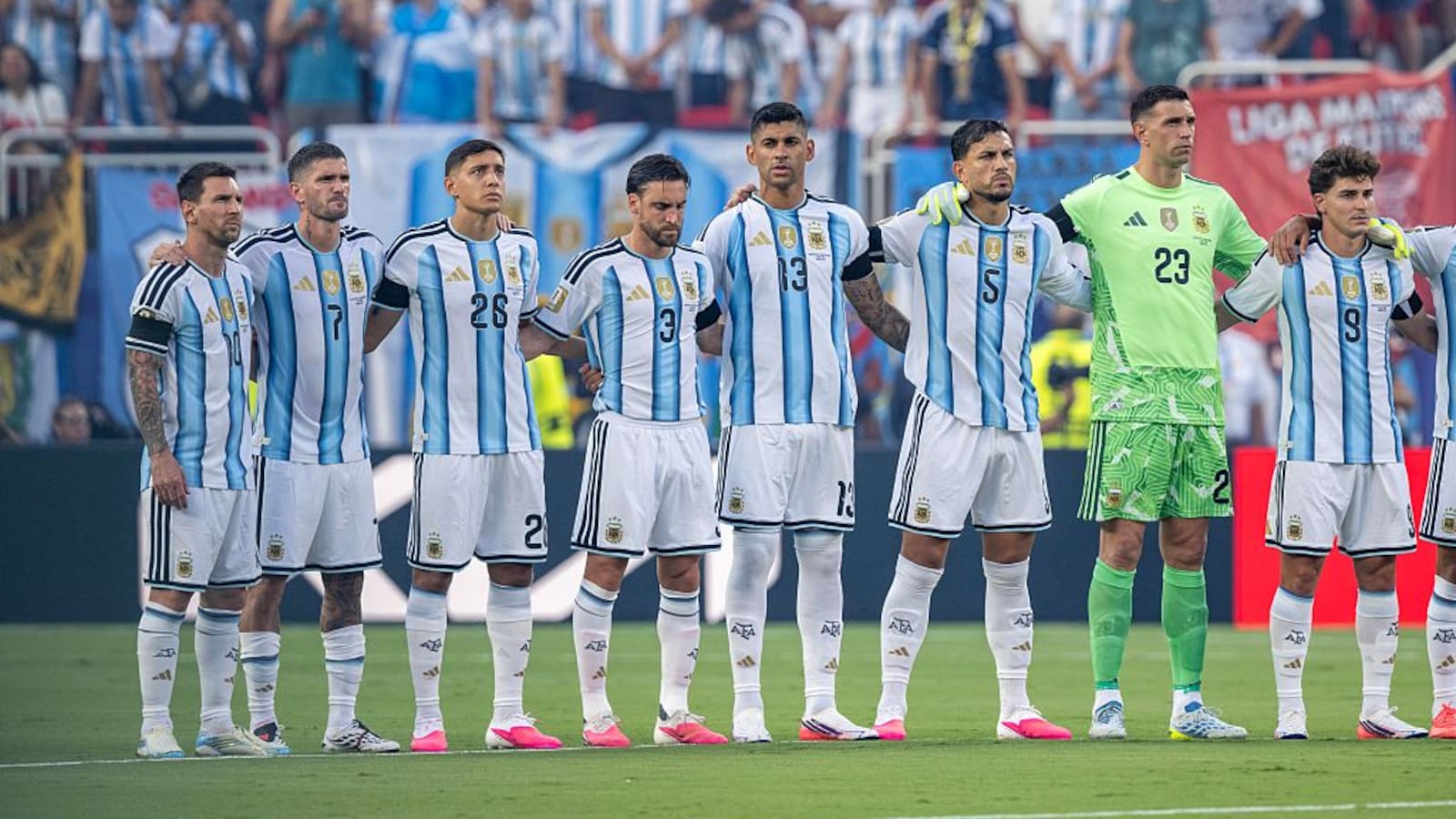
The figures suggest that the long-term rivalry has been competitive even though individual games have sometimes been one-sided. Spain’s 6–1 victory and Argentina’s 4–1 win account for large portions of the overall scoring difference.
Another factor is the number of narrow results. Several meetings ended with a one-goal margin, including the 2026 final, while two matches finished level. These outcomes help explain why the overall goal totals remain relatively close.
Tactical Contrast Behind the Numbers
Statistics cannot explain every result, but the teams’ tactical identities provide useful context. Spain have traditionally emphasized possession, structured buildup and technical midfield play. Argentina have often combined technical quality with quick transitions, individual creativity and strong competitive intensity.
When Spain control midfield, they can force opponents into long defensive phases. When Argentina win the ball and attack space quickly, they can create chances before a defense resets. The 2018 and 2010 results illustrate how these contrasting approaches can produce very different outcomes.
What These Stats Mean for Future Meetings
The spain national football team vs argentina national football team stats suggest that future encounters are difficult to predict purely from historical records. Spain have the overall advantage with seven wins to six, but Argentina remain within one victory of drawing level.
The narrow goal difference also supports the idea of competitive balance. Even though the rivalry contains extreme results, the aggregate numbers are close. That makes factors such as current squad form, coaching strategy, venue and tournament pressure especially important.
For analysts, the best approach is to combine historical head-to-head data with recent competitive performance rather than treating old results as a direct forecast.
Key Takeaways From the Rivalry
- Spain lead the overall senior head-to-head series, seven wins to six, with two draws.
- Spain have scored 20 goals compared with Argentina’s 18.
- Spain’s largest victory was 6–1 in 2018.
- Argentina’s largest victory was 4–1 in 2010.
- The two nations are level at one World Cup win each after the 1966 and 2026 meetings.
- The latest World Cup final ended 1–0 to Spain after extra time.
Conclusion
The spain national football team vs argentina national football team stats describe a rivalry defined by balance, dramatic scorelines and changing eras. Spain currently hold the overall edge with seven victories from 15 meetings, while Argentina have six wins and two draws. The 20–18 goal difference reinforces how closely matched the teams have been over time.
The most important recent development is Spain’s 1–0 extra-time victory in the 2026 World Cup final. Alongside the famous 6–1 Spanish win in 2018 and Argentina’s 4–1 response in 2010, that result adds another defining chapter to an already rich international rivalry.
Rather than pointing to permanent dominance, the statistics show two elite football nations capable of beating each other in very different circumstances. That competitive uncertainty is precisely what makes future Spain-Argentina meetings so compelling.

