

The Mumbai Indians vs Lucknow Super Giants match scorecard is an important resource for cricket fans who want to understand how these two Indian Premier League (IPL) teams perform against each other. Mumbai Indians (MI) are known for their championship history, experienced players, and ability to recover under pressure. Lucknow Super Giants (LSG), meanwhile, have built a competitive reputation through aggressive batting, versatile bowling options, and tactical decision-making. When these teams meet, the contest often attracts attention because of the potential for powerful batting displays and crucial bowling spells.
A cricket scorecard provides much more than the final result. It records individual batting contributions, wickets, overs, bowling figures, extras, and the overall progress of an innings. By examining these details, readers can identify which players made the biggest impact and how the match developed from the opening overs to the final delivery. Whether someone follows live cricket, reviews completed matches, or researches IPL statistics, understanding the scorecard makes the contest easier to analyse. The match date and season are essential when looking for a particular result because the teams may face each other more than once across different IPL editions.
Overview of Mumbai Indians vs Lucknow Super Giants
Mumbai Indians and Lucknow Super Giants represent two different stages of IPL development. Mumbai have a long history in the competition and have traditionally relied on a combination of experienced international stars and promising Indian players. Their approach often focuses on building a strong batting foundation before accelerating during the middle and death overs. The team also places considerable importance on finding bowlers who can handle difficult situations and restrict opposition scoring.
Lucknow Super Giants entered the IPL in 2022 and quickly established themselves as a competitive side. Their squad-building strategy has generally emphasised adaptable batters, multi-skilled players, and bowlers capable of operating in different phases. Against Mumbai, Lucknow need to balance aggression with discipline, especially when facing experienced players in high-pressure situations. The result can depend on powerplay wickets, partnerships in the middle overs, and the ability to score quickly at the end of an innings.
The Mumbai Indians vs Lucknow Super Giants match scorecard helps readers compare these approaches through actual match figures. However, the precise score, top scorers, best bowling performances, and result must be linked to a specific fixture rather than assumed from the teams’ general records.
Match Scorecard at a Glance
A scorecard summarises the major details of a cricket match in a structured format. Before analysing individual performances, readers should identify the season, match date, venue, toss winner, and innings totals. These details provide the context required to interpret the numbers correctly.
| Match Detail | Information to Check |
|---|---|
| Tournament | Indian Premier League |
| Teams | Mumbai Indians vs Lucknow Super Giants |
| Match date | Depends on the selected fixture |
| Venue | Confirm from the match record |
| Toss result | Check the official scorecard |
| First innings | Total runs, wickets, and overs |
| Second innings | Total runs, wickets, and overs |
| Top batter | Highest individual run scorer |
| Best bowler | Most influential bowling figures |
| Match result | Confirm from the completed fixture |
This overview is a scorecard-reading template, not a claim about a particular match result. Actual figures should be added only after identifying the relevant fixture. This distinction matters because publishing an incorrect total or attributing a performance to the wrong player can mislead readers and weaken the accuracy of cricket content.
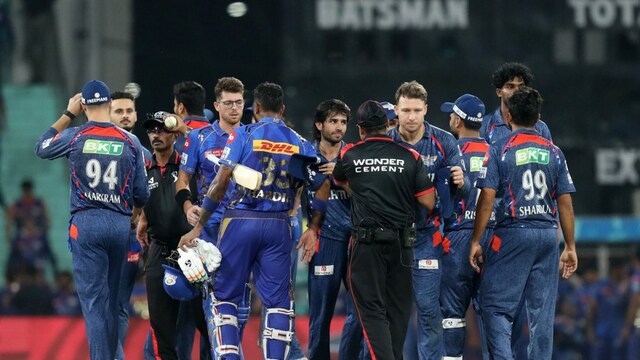
Mumbai Indians Batting Performance
Mumbai Indians’ batting performance can be assessed by looking at the opening partnership, the stability of the middle order, and the scoring rate during the final overs. Openers usually aim to establish a foundation while taking advantage of fielding restrictions. A productive powerplay can help Mumbai build momentum, but losing several wickets early may force the middle order to concentrate on rebuilding instead of attacking.
The middle order plays a particularly important role when the opening batters fail to convert their starts into substantial innings. Players who can rotate the strike, find gaps, and hit boundaries at the right moments help maintain a competitive run rate. In T20 cricket, partnerships are often more valuable than isolated big shots because they allow a team to preserve wickets while increasing the scoring tempo.
When reviewing the Mumbai innings, readers should examine each batter’s runs, balls faced, fours, sixes, and strike rate. A batter who scores quickly from a limited number of deliveries may have a major impact even without recording the highest total. Similarly, a patient innings can be valuable when wickets fall regularly at the other end. The actual Mumbai batting figures should be taken from the selected match’s scorecard.
Lucknow Super Giants Batting Performance
Lucknow Super Giants’ batting analysis should focus on how effectively the team responds to Mumbai’s bowling attack. A strong start can place pressure on the opposition captain and allow the middle order to play with greater freedom. However, aggressive intent must be balanced with shot selection, especially when Mumbai use variations in pace or introduce spin to disrupt partnerships.
The middle overs are often decisive in an IPL chase or first-innings effort. During this phase, batters need to avoid extended periods without scoring boundaries while ensuring that wickets are not lost in quick succession. Rotating the strike is important because it prevents bowlers from settling into predictable patterns. If Lucknow enter the final overs with wickets in hand, their finishing batters may be able to increase the run rate significantly.
The most useful statistics include runs scored, balls faced, boundary count, strike rate, and dismissal details. For a successful chase, the timing of partnerships and the remaining wickets can explain why the batting side reached its target. For a first-innings total, the distribution of runs across the powerplay, middle overs, and death overs reveals whether the team finished strongly or left scoring opportunities unused.
Bowling Analysis and Key Wickets
Bowling performances frequently determine the direction of an MI versus LSG encounter. Fast bowlers may look for early wickets with movement and changes of length, while spinners can slow scoring during the middle overs. At the death, yorkers, slower deliveries, and carefully planned field placements can make the difference between defending a total and allowing the opposition to finish strongly.
A bowler’s figures should be evaluated through overs bowled, runs conceded, wickets taken, and economy rate. Wickets are important, but economy also reveals how effectively a bowler controls scoring opportunities. A spell with few wickets may still be valuable if it forces batters to take risks against another bowler. Conversely, a wicket-taking spell can transform the match even if the economy rate is relatively high.
Fielding also contributes to the bowling effort. Catches, run-outs, and sharp stops can prevent additional runs and create pressure. When comparing both teams, readers should identify the bowlers who dismissed key batters and consider when those wickets occurred. Removing a set batter near the end of the innings may be more influential than taking a wicket after the batting side has already established a comfortable position.
Key Players and Match-Winning Contributions
The most influential player is not always the highest run scorer or the bowler with the most wickets. Cricket requires performances to be considered in context. A batter who scores a rapid 35 can change the match’s momentum, while a bowler who concedes very few runs in a crucial over can make a major contribution without taking a wicket.
For Mumbai Indians, attention should be given to the top-order batters, middle-order finishers, and bowlers entrusted with the powerplay and death overs. Their roles vary according to the playing XI and match situation. A strong opening partnership can provide stability, while an effective finishing performance can turn a moderate total into a competitive one.
For Lucknow Super Giants, the analysis should consider the consistency of their top order, the adaptability of their middle order, and the effectiveness of their bowling combinations. All-rounders may be especially important because they provide flexibility in both innings. The final assessment should rely on actual match statistics rather than assumptions based on reputation, previous performances, or expected team selections.
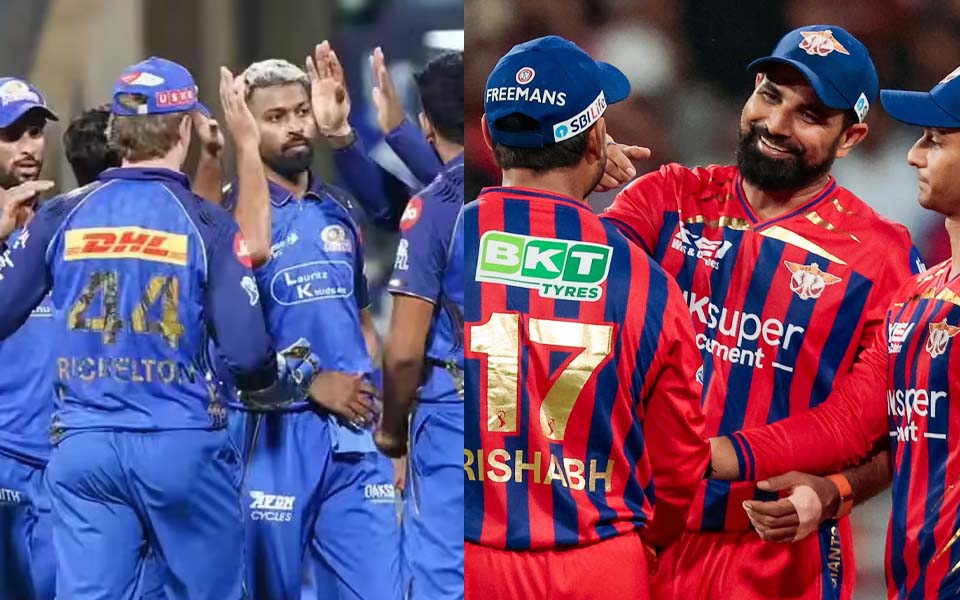
Important Statistics to Compare
A detailed scorecard becomes more useful when individual figures are compared with the broader match situation. Readers can use several indicators to understand which team controlled the contest and where the decisive advantage emerged.
- Total runs: Shows the overall scoring output of each innings.
- Wickets lost: Indicates how frequently the batting side lost control.
- Run rate: Measures scoring speed across the innings.
- Batting strike rate: Highlights how quickly individual batters scored.
- Bowling economy: Shows how many runs a bowler conceded per over.
- Partnerships: Reveal which batting combinations built momentum.
- Powerplay performance: Helps explain the early direction of the match.
- Death-over scoring: Shows how effectively teams finished their innings.
- Extras: Includes wides, no-balls, byes, and leg-byes where applicable.
These indicators should be interpreted together. A team can score fewer runs but still win by successfully chasing a target, while a high-scoring innings may not guarantee victory if the bowling attack cannot defend it. Likewise, a low economy rate can be more valuable in one situation than another, depending on the required run rate and wickets remaining.
How Match Conditions Influence the Scorecard
Pitch behaviour, weather, boundaries, and ground dimensions can influence the final score. A flat surface may reward aggressive batting, while a slower pitch can make timing difficult and increase the importance of placement. Some venues offer more assistance to spin, whereas others favour fast bowlers who use pace and bounce effectively.
The toss can also affect tactical decisions. Captains may choose to bat first when they expect the surface to become slower, or bowl first when chasing conditions appear favourable. Nevertheless, the toss alone does not determine the outcome. Execution, partnerships, bowling discipline, and fielding remain central to the result.
The venue should therefore be considered when interpreting a Mumbai Indians vs Lucknow Super Giants match scorecard. A total that looks modest at one ground might be competitive at another. Comparing scores across different seasons without considering pitch conditions and match circumstances can produce misleading conclusions.
Why Fans Search for the Match Scorecard
Cricket fans search for scorecards for several reasons. Some want to confirm the final result, while others are interested in a favourite player’s runs, strike rate, wickets, or economy. Fantasy cricket followers may review individual performances, and sports writers may use scorecard information to prepare match reports and statistical summaries.
A well-organised scorecard also helps readers compare performances across seasons. It can reveal patterns such as consistent contributions from a particular batter, a bowler’s success against certain opponents, or a team’s tendency to score more quickly in the second half of an innings. Such observations become more reliable when supported by multiple matches rather than a single result.
For accurate research, readers should match the scorecard to the correct season and date. Team names alone are insufficient because Mumbai Indians and Lucknow Super Giants have met in multiple IPL fixtures. Verifying the fixture first ensures that the batting figures, bowling statistics, and final result all belong to the intended match.
Conclusion
The Mumbai Indians vs Lucknow Super Giants match scorecard offers a clear way to understand the performances, tactics, and decisive moments behind an IPL contest. By studying batting contributions, bowling figures, partnerships, run rates, and wickets, readers can go beyond the final result and understand how each innings developed. Venue conditions, toss decisions, and pressure situations add further context to the numbers.
For a reliable match report, the exact fixture must be identified before publishing scores or naming standout players. Once the correct scorecard is available, the figures can be used to explain which team controlled the key phases and which individual contributions made the greatest difference. A carefully verified scorecard provides useful information for fans, analysts, and cricket content creators while keeping the article accurate and informative.

